The Meaning of Surya Namaskar
Written by Tess
Beyond the literal translation of “Sun Salutation,” Surya Namaskar holds a profound layer of
internal and cosmic symbolism. In traditional Hatha lineages, it is not just a warm-up; it is a
ritualised “Sadhana” (spiritual practice).
Here is a guide to help you deepen your understanding of Surya Namaskar…
Here is a more in-depth look at its meaning:
- The Internal Sun (Solar Plexus)
In yogic anatomy, the body has a “sun centre” located at the Manipura Chakra (the solar
plexus). This is the seat of your fire, digestion, and personal power. Surya Namaskar is designed
to “kindle” this internal fire (Agni). By moving through the sequence, you are physically and
energetically expanding this centre, which is said to increase your intuition, clarity, and vital
energy (Prana). - A Cycle of Life and Death
The structure of the sequence; rising up, folding down to the earth, and rising
again, symbolises the natural cycles of the universe.
The Ascent: Poses like Urdhva Hastasana represent growth, creation, and the rising sun.
The Descent: Poses like Uttanasana represent introspection, letting go, and the setting
sun. Returning to Samasthitihi at the end represents the “still point” or the state of
equilibrium between these forces. - Connecting the Macrocosm and Microcosm
Ancient yogis taught that we are a “microcosm” of the universe. Just as the sun is the heart of our
solar system, providing light and life to everything, the practice reminds us that we have a
“spiritual sun” within our own hearts. - The Devotional Aspect (Bhakti)
Historically, Surya Namaskar was practiced at dawn (Sandhya), facing the rising sun. It was an
act of “Bhakti” or devotion. It is a physical way of saying, “I recognise that my life is dependent
on a power greater than myself.” It shifts the practice from a “workout” to a “work-in,” moving
the ego out of the way to acknowledge the source of all life. - Breath as the Thread (Sutra)
On a deeper physiological level, the sequence is a breath-bridge. By pairing every expansion
with an inhale and every contraction with an exhale, you are practicing Pranayama (breath
control) in motion. This synchronicity is meant to still the “chatter” of the mind, eventually
leading to a state of moving meditation where the practitioner, the breath, and the movement
Heres a fun thing to try next time you are standing in a river up to your thighs! Do your sun salutations, you’ll soon learn when to breath and when not to! Do send video! I think I may do this as a reel soon so watch out on the socials!
Below is a Step-by-Step Sequence as I teach it, there are variations depending on lineage, region and style but most are recognisable as the following flow.
1. Samasthitihi (Equal Standing)
- Description: Stand at the top of your mat with feet together and weight evenly distributed. Hands can be at your sides or in prayer position at the heart. It is the pose of stillness and intention. Start your Ujjayi Breath for a few moments.
2. Urdhva Hastasana (Upward Salute/Tadasana)
- Description: INHALE sweep your arms out and up toward the ceiling. Press the palms together if possible and look up at your thumbs, lengthening the entire front of the body.
3. Uttanasana (Standing Forward Fold)
- Description: As you hinge at your hips and fold forward start to EXHALE as you fold over. Let your head hang heavy and place your hands on the floor or your shins. This stretches the back of the legs and the spine.
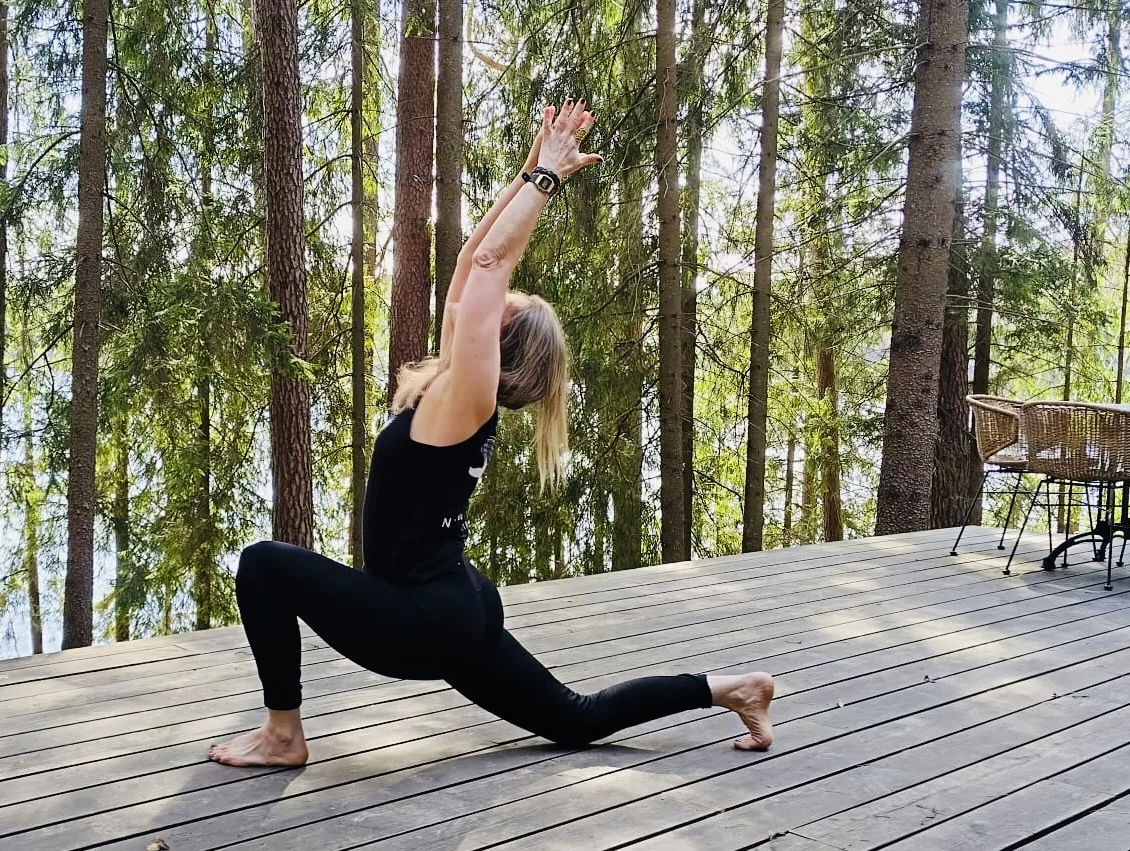
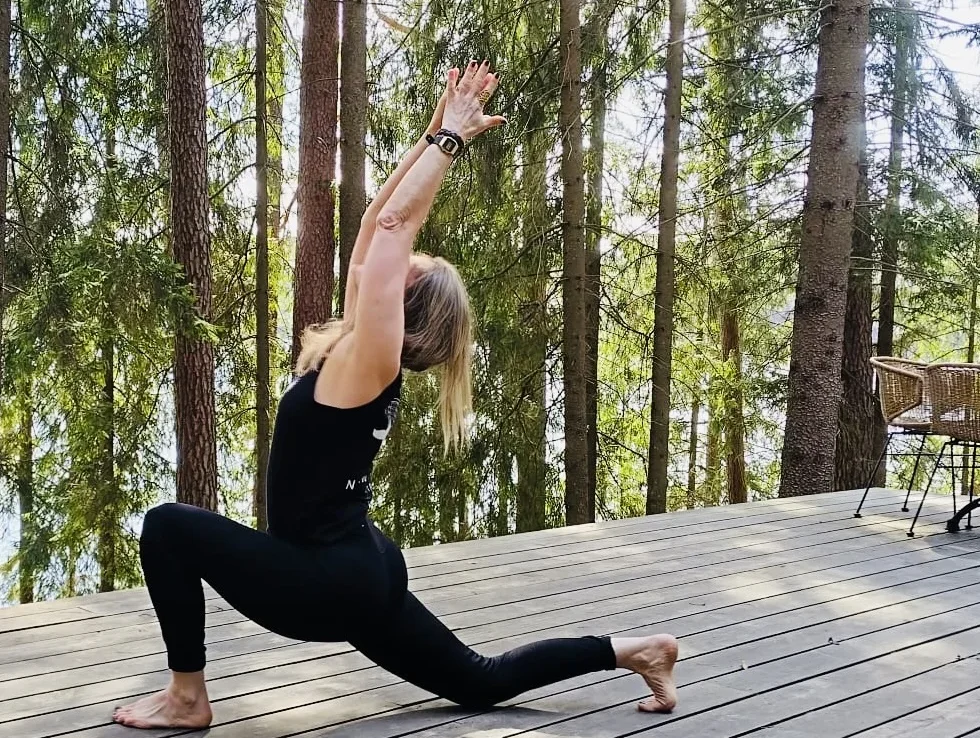
4. Anjaneyasana (Low Lunge)
- Description: HOLD YOUR BREATH, Step your right foot back and lower the back knee to the mat. Keep the front knee directly over the ankle. NOW INHALE as you lift your chest and reach your arms up (or keep hands on the floor) to open the hips.
5. Adho Mukha Svanasana (Downward-Facing Dog)
- Description: HOLD YOUR BREATH. Step your front foot back to join your back foot and lift your hips high and back. EXHALE NOW as you move into an inverted “V” shape. Focus on pushing the floor away with your hands and reaching your heels toward the mat, they do not need to touch the mat.
6. Phalakasana (Plank Pose)
- Description: INHALE as you shift the bodweight forwards over your wrists, engaging your core and pressing away from the floor through the hands.
7. Bhujangasana (Cobra Pose)
- Description: EXHALE as you lower your knees, chest, and chin (or hips) to the floor. On an inhale, peel your chest up while keeping your elbows hugged in and shoulders away from your ears. Keep your hands next to your chest, do not slide them forward, your pelvis should not leave the floor, and its rare the arms will be straight. Keep your hands and toes in position exactly here as your lift up and back for Down Dog and this should give you the perfect length, try not to shorten the stance.
The Reverse Path to Finish
To complete the cycle, you step back through the poses in reverse order:
Adho Mukha Svanasana: Tuck your toes and push off the thighs back to Downwards Facing Dog. Exhale when there.
Anjaneyasana: Hold the breath. Step the right foot forward between your hands, dropping the left knee to the floor. Inhale as your sweep your hands and gaze to the sky.
Uttanasana: Hold the breath. Step the left foot forward to meet the right foot and fold deeply over your legs Exhaling as you fold.
Urdhva Hastasana: Inhale as you rise all the way up, reaching your arms to the sky once more.
Samasthitihi: Exhale as you bring your hands back to your heart and return to your neutral standing position.
Now complete another round starting with the left foot leading, once you have done right side, left side, this is considered a full round.
REMEMBER: ONE BREATH, ONE MOVEMENT. CONTROL THE BREATH. This may be hard to start with, but the control of the breath is where the magic happens, especially the breath retention as this is where Prana/Energy is distributed/infused.
Complete as many as you can, when you can, but with full intention, preferably when the sun is 30 degrees off the horizon in the morning. Don’t forget your Ujjayi Breath, this is the mainstay of your practise, the guiding light, the captain of your ship, without it, you are lost at sea, however long it takes you exhale or inhale is how long it should take you to move from one pose to another, try not to snap your body around the mat, try to let the full sequence become one beautiful flowing sequence with the breath guiding the movement.
Obviously modify where you need to, that is totally fine we all have different bodies, but you do need to understand the objective of the intended alignment to work towards. Without that goal, it’s like saying you don’t need four wheels at each corner of a car! (Reliant Robin excluded from that argument before you write in ha ha!)
There is also lots more alignment cues, but to get those you need to come to my classes!!! See you on the mat soon yes!
Hari Om Beautiful Soul
Lots love Tess xxx